The beginning
The problem I ran into
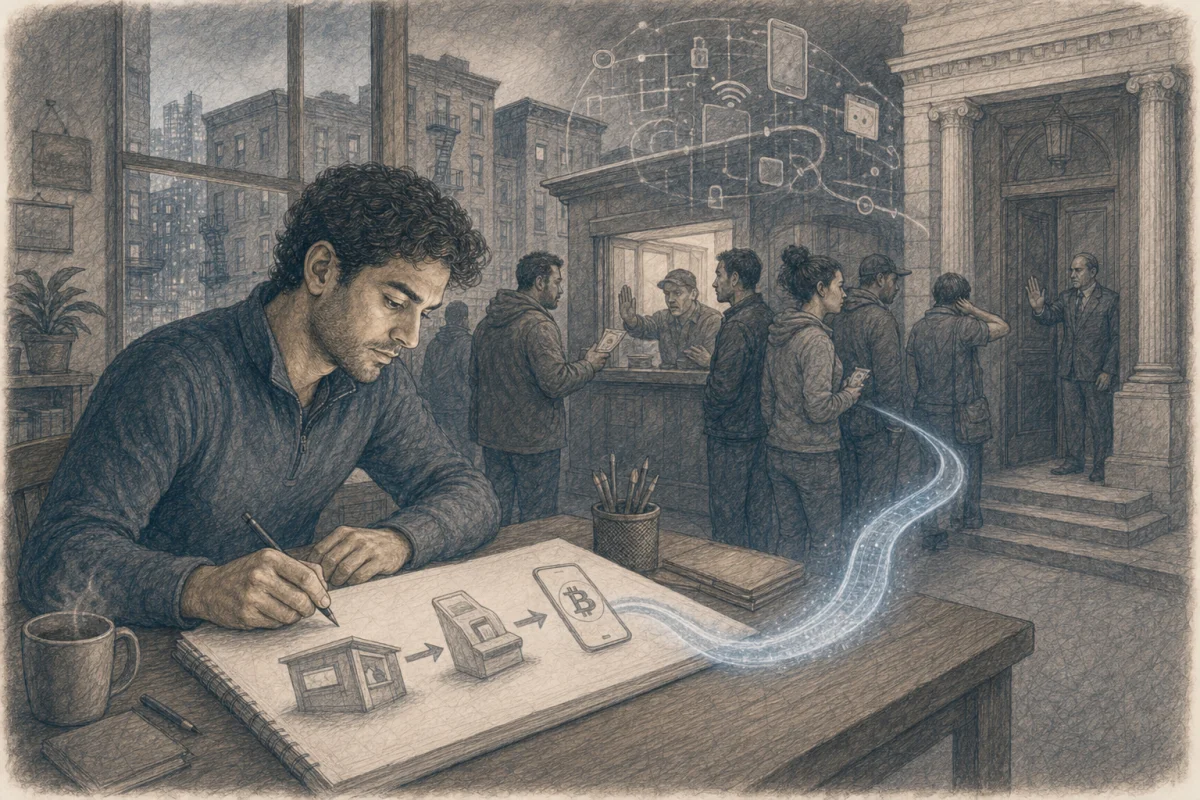
Before Crypto Dispensers, I was someone trying to buy Bitcoin. I had read enough to want to own some, but understanding why it interested me was easier than figuring out how to buy it. A purchase I tried to make through Coinbase did not go through. I later bought Bitcoin with cash. That experience stayed with me.
The industry was talking about opening finance to more people. Yet getting started often assumed that you already had a bank account that worked with an exchange, understood the unfamiliar screens, and felt comfortable sending money through a process you had never used. Those assumptions seemed small until you were the person struggling with them.
I began wondering how many other people were stopping at the same point. Someone could want to participate and have the money to do it, but still need a clearer way in. I had experienced enough of that difficulty myself to take it seriously.
That gave me a practical question to work on: could I build a service that made buying Bitcoin easier to understand, especially for someone starting with cash?
Chicago and family
The people I had in mind
I grew up in Chicago. My father came to this country from Palestine, and my mother was born here. I knew working families, immigrants, small business owners, and people who earned or managed much of their money in cash. Their financial lives did not always resemble the customer that an online platform seemed to expect.
Using cash did not tell me whether a person was responsible, curious, or capable of understanding Bitcoin. It told me something about how they handled their money. I wanted to start there and build a process they could follow.
By then, I had already made choices that put pressure on me to make something work. I left law school after one year to pursue business. People who cared about me were disappointed. I was married, had responsibilities, and had already lost money on ventures that did not succeed. Starting another business was a decision I had to live with long after the initial excitement passed.
Those experiences made me more interested in useful work. I needed a problem I could understand well enough to keep working on when things became difficult. Helping someone complete a purchase that had been confusing to me felt specific enough to begin.
The early work
Learning through the first machines
A Bitcoin ATM was a practical place to start. A customer could visit a physical location and use cash. For someone unfamiliar with online exchanges, that gave the purchase a setting they recognized. There was a machine in front of them and a sequence of steps to follow.
Operating those machines taught me how much work sat behind that simple description. We had to find locations, work with store owners, keep equipment running, manage cash, and answer customers. A machine could be installed and still leave plenty of problems for us to solve.
I learned a great deal from the questions people asked. When someone was unsure what had happened to their money, a vague answer made the situation worse. They needed us to explain the transaction, check the facts, and tell them what would happen next. Clear instructions and patient support mattered as much as the screen they were using.
The early years involved driving, troubleshooting, negotiating, answering calls, and putting money back into the business. Each new location added work before it proved whether it would succeed. I carried that uncertainty home with me, even when I tried to leave it at work.
What kept me interested was seeing people use something we had built. The questions and problems were real, and so was the chance to improve the experience. I could learn from one transaction and apply that lesson to the next.
Changing the approach
Why the company had to change
As we operated more machines, their limits became clearer. A customer needed a convenient location. Equipment needed maintenance. Cash had to be collected and handled securely. Those costs affected what it took to provide the service.
I had to ask whether adding more machines was always the best answer. I had put years of work into that model, so changing it was not an abstract business exercise. But the reason I started the company gave me a way to judge the decision: would a different approach make the service more useful to the customer?
We began developing an account-based platform and additional ways to pay. Retail cash loading became part of that work. With the former Bitcoin POP service, a customer could use an account barcode to add cash at a participating retailer. Once the dollar balance posted, buying Bitcoin was a separate step. Retail cash loading has since ended. Today, customers can explore Bitcoin purchases by bank wire.
Card payments and bank transfers also became part of the broader service, with different requirements and availability. Customers have different circumstances. Someone who prefers cash and someone who wants to use a bank account should be able to understand the option available to them without sorting through language written for industry insiders.
Changing the product also meant improving the explanations around it. A customer should know what they are paying for, what stage their transaction has reached, and where to get help. More options are useful only when people can make sense of them.
Earning trust
The responsibility that came with it
When a customer trusts a company with money, good intentions are not enough. The company needs people and procedures that can handle the work. It needs to verify identities, keep records, examine unusual transactions, respond to possible fraud, and meet the requirements that apply to its business.
I learned that work as the company developed, through hiring, seeking advice, and working with outside professionals. There were subjects I needed help understanding and decisions that required experience beyond my own. Being the founder did not make me qualified to answer every question.
It also became clear to me that making a service easier to use does not mean removing every check. Sometimes a transaction needs more information or closer review. The responsibility is to take that seriously and explain what we can clearly, rather than leave a customer guessing.
I do not think a company earns trust by declaring itself trustworthy. It earns it through the way it handles ordinary transactions and difficult ones: whether it keeps useful records, answers questions honestly, investigates problems, and corrects mistakes. That work continues for as long as the business operates.
The reason to continue
What still matters to me
Looking back, I can describe the company more neatly than I could while I was building it. At the time, there were failed assumptions, expenses I had to figure out how to cover, and decisions whose results I could not know in advance. My family lived with that uncertainty too.
I am grateful to the people who helped carry the work and to the customers who gave us a chance. Their trust created obligations that mattered more than how convincing the business sounded on paper.
The company has changed considerably since 2017. I expect it will keep changing as we learn what works and what needs improvement. I am less attached to any one method than I was when I began, because I have seen how quickly a method can become a limitation.
I still return to the experience that started it: wanting to buy Bitcoin and finding the process harder than it needed to be. I started Crypto Dispensers because I thought I could help solve that problem. The standard I want to keep is simple: can a customer understand the service, make an informed choice, and get a clear answer when they need help? There is still work to do on all three.