A friend and an old Mac
A friend first told me about Bitcoin around 2015. I was in my twenties and curious enough to experiment with it. I remember trying to mine it on a Mac I owned at the time.
I cannot tell you exactly how much I mined or where it went. I eventually sold the computer and lost track of it. I do not want to make that memory more precise than it is.
At the time, Bitcoin was something I had heard about and tried. I had not yet made it an important part of my life. Other responsibilities took my attention, and I moved on.
The purchase that failed
When I returned to Bitcoin, I tried to buy it through Coinbase at a price I remember as roughly $700 per coin. That would place the attempt around late 2016, though I do not have an exact transaction date here.
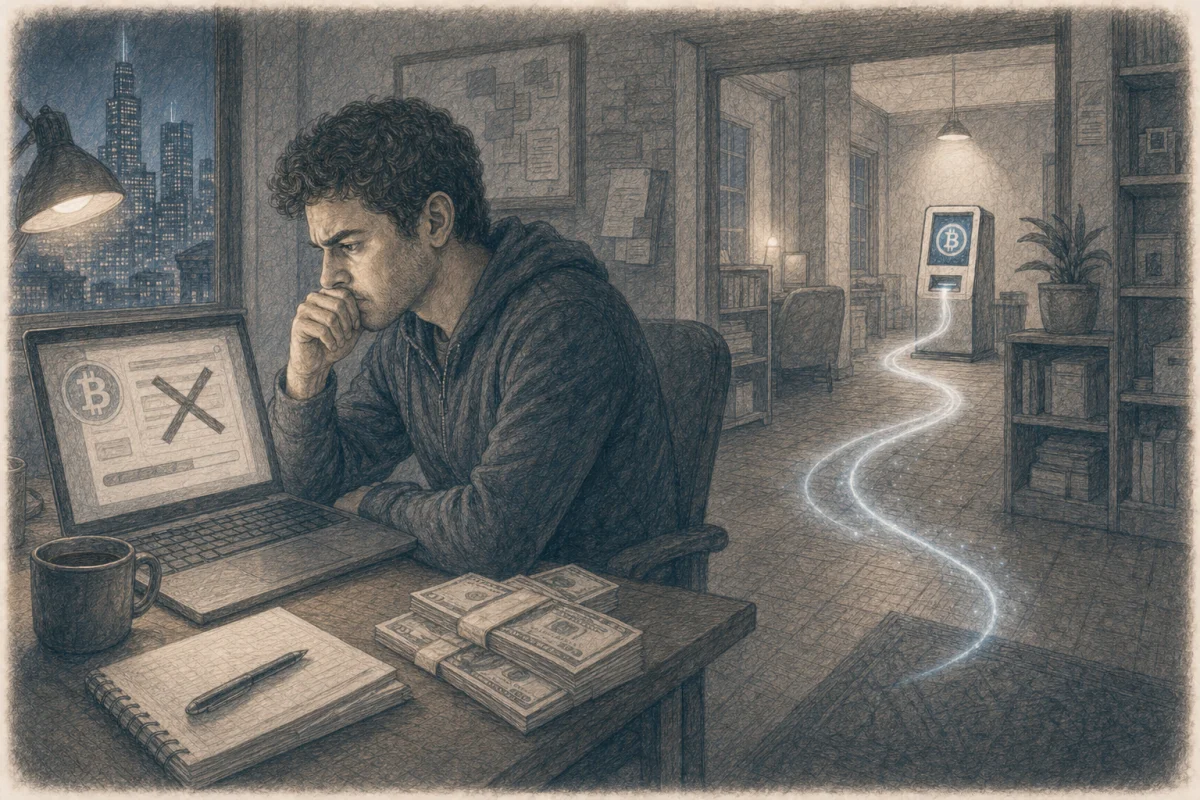
I chose to pay from my bank account through ACH. I clicked to make the purchase, but the money did not leave the account immediately. Before the debit arrived, I spent some of the funds. The payment failed.
By the time I understood what had happened, I needed the remaining money for other things. I could not simply replace it and complete the purchase. I let the opportunity go.
That was my mistake, and it taught me something about the process. Clicking a button and completing a payment were different events. I had treated them as though they were the same.
Turning savings into cash
In 2017, the market drew my attention again. I wanted to buy Bitcoin, and I wanted to do it quickly. I was interested in the technology, but I also wanted to make a return. I will not pretend speculation played no part in the decision.
I had savings from operating apartments on Airbnb. I had used some of those profits to buy silver and then gold because physical metal made it harder for me to spend the money impulsively.
I sold approximately $40,000 in gold bullion to a jeweler I dealt with in Orland Park, Illinois. I received paper cash. I could have deposited it and arranged a bank transfer, but I wanted to avoid another waiting period.
I chose a RockItCoin Bitcoin ATM. It was more expensive than the bank-funded route I was considering. I accepted that cost because I wanted to receive the Bitcoin and move it to the exchanges where I intended to trade.
Recognizing a business I wanted to build
I remember making the cash purchase when Bitcoin was trading in roughly the $2,000 to $3,000 range. I received Bitcoin and sent it to exchanges including Bittrex and Bitfinex, where I traded other cryptocurrencies during the 2017 market.
The amount made the experience memorable, but the process was what gave me the business idea. I had physical cash. The machine gave me a way to turn it into Bitcoin without first completing the bank transfer I had been trying to avoid.
I began looking at the machine as a possible business. If I valued that option enough to pay for it, other people might need it too. Their reasons would not necessarily be the same as mine.
I wanted to understand what it would take to offer that service myself. That question became more important than the trade that brought me to the machine.
Forming the company first
On September 12, 2017, I founded Virtual Assets, Inc., doing business as Crypto Dispensers. I formed the company before I owned or operated a Bitcoin ATM.
I then ordered a machine from General Bytes in the Czech Republic. It was initially supposed to arrive at my house. While it was in transit, I contacted people who already operated in the industry because I wanted to learn before the equipment arrived.
Daniel Polotsky and Ben Weiss at CoinFlip agreed to let me invest with them in three Bitcoin ATMs. I redirected the General Bytes delivery to CoinFlip, and we worked together for a short period.
After approximately three or four months, we separated and my investment was returned. We had not worked well together. I continued with Crypto Dispensers.
An expensive lesson
I had signed a noncompete agreement without fully understanding the consequences it could have for me. When I continued in the Bitcoin ATM business, that agreement became the subject of a legal dispute.
I ultimately paid approximately $70,000 to settle the dispute and remain in the business. That was a significant cost at an early point in the company. It taught me to give the agreements I signed the same attention I gave the opportunity in front of me.
Operating the business brought other lessons. Customers saw a screen and expected a transaction to work. Behind it, we had to handle cash, obtain Bitcoin, maintain banking relationships, answer questions, and meet legal requirements.
Enthusiasm helped me start. It did not answer those questions for me. I had to learn the work and bring in help where I needed it.
What came from that first experience
Crypto Dispensers eventually grew beyond Bitcoin ATMs. The machines had given me a way to begin, but they also showed me costs and limits that more machines would not always solve.
The larger question was how to help people use the money they already had to buy supported digital assets through a process they understood. That could involve cash, a card, or a bank transfer, depending on the customer's circumstances and eligibility.
I did not know that whole path when my first Coinbase payment failed. I knew I had tried to do something and had not completed it. When I tried again, the method I chose showed me an opportunity to serve other people.
The company came from following that opportunity beyond the first idea. It took work I had never done and decisions I could not make with certainty. I kept learning because I believed the problem was worth solving.