Collecting cash from our ATMs
In the early days of Crypto Dispensers, I collected cash from our Bitcoin ATMs myself. Garda and Brink's did not service our machines. When the machines needed to be emptied, I drove from state to state to do it.
Those trips taught me the business in a way a spreadsheet could not. Customers were using cash to buy Bitcoin. The demand was there, but serving it involved long drives and work that had to happen again and again.
Collecting the money was only part of the job. I also needed a bank willing to accept it so the company could buy Bitcoin, pay expenses, and continue operating. That became one of our most difficult problems.
Trying to keep a bank account
In my experience, banks including JPMorgan Chase, Bank of America, and PNC closed our accounts after learning that the business bought Bitcoin. We had purchased Bitcoin through Coinmama using cards and later through Coinbase using wire transfers.
When an account closed, the business still had customers and bills. I had to find another way to move money while trying to understand what had gone wrong. It was difficult to plan around a relationship that could end without an explanation I could use.
That experience changed the way I thought about people with limited banking options. I was running a financial business and struggling to obtain basic banking services myself. The problem we wanted to solve for customers had become part of our daily work.
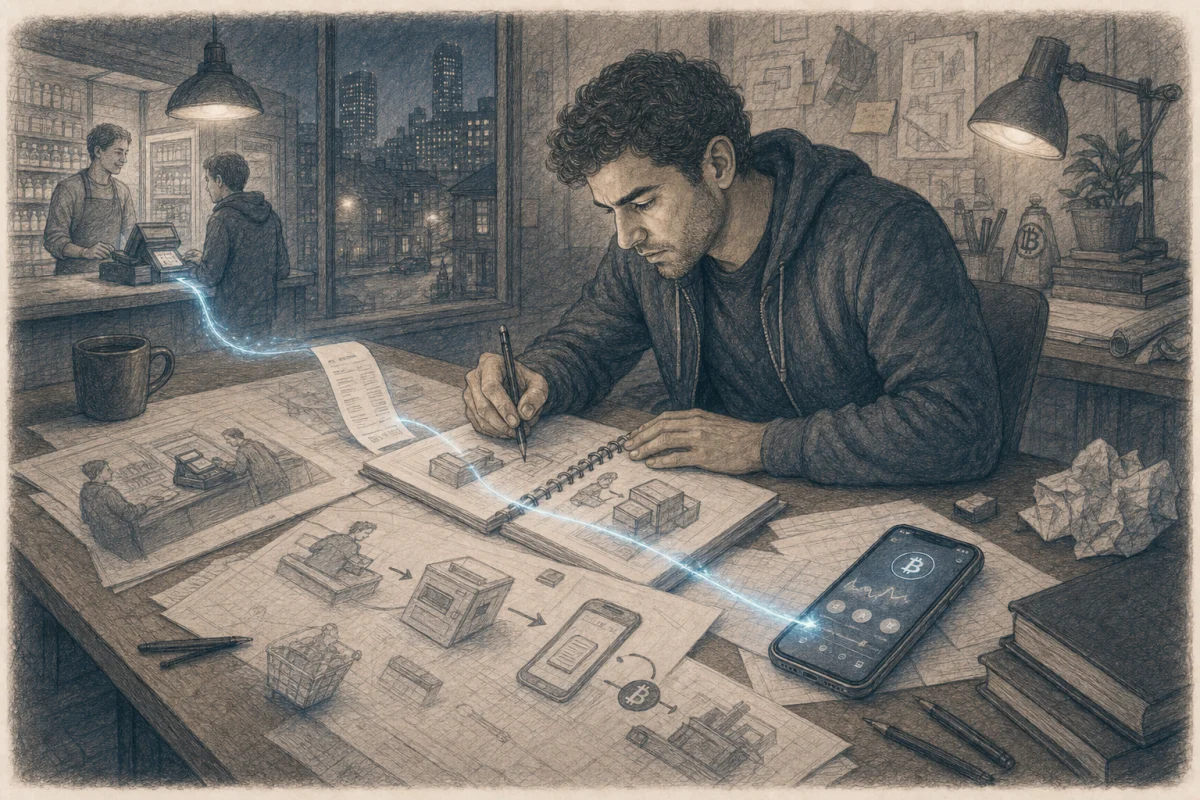
The receipt at Speedway
During one cash collection trip, I stopped at a Speedway gas station to add money to my Chime account. Chime was one of the practical options available to me at the time.
The transaction happened at the register. I handed over cash and received a receipt. I did not need a traditional bank branch or a special machine.
I noticed that Green Dot Bank had facilitated the transaction. That detail made me stop and think. If this service could let me add cash to my Chime account, could it let a Crypto Dispensers customer fund an account and then buy Bitcoin?
I had spent so much time dealing with cash collection and banking problems that I recognized why this might help. The retailer already had a register and a process for accepting cash. We would need to build the account and software around it.
Asking again
I contacted Green Dot about working together. The first answer was no. We were a young Bitcoin company asking to use an established payment service in a different way.
I left the conversation with the same problem I had before it. The idea still made sense to me, and the need had not gone away. Six to eight months later, I approached Green Dot again.
This time the answer was yes, with a condition: we had to build a web application that could connect to its system. We had the opportunity. Now we needed to find someone who could help us build the software.
Learning to build software
We knew how to operate Bitcoin ATMs. We understood cash handling, customer questions, and the difficulty of keeping banking relationships. Building an online platform was new to us.
Through Toptal, we found Nikola Stanojevic, a developer in Serbia. He helped us build the first Crypto Dispensers web application and connect it to Green Dot's software.
The first retail network included roughly 16,000 locations, including stores such as CVS, Rite Aid, 7-Eleven, Winn-Dixie, TOPS, and Love's. Those names and that count describe the early network, not a promise about which locations are available today.
The important change was that a customer could start at an ordinary retail register. We no longer had to install our own machine at every place where someone wanted to use cash.
Why we called it Bitcoin POP
POP stands for Point of Payment. The name described where the cash transaction happened: at a store register, with a cashier and a barcode connected to the customer's account.
Cash loading and buying Bitcoin are separate steps. The cash funds a dollar balance. After that balance posts, the customer returns to the account to make a separate purchase. Getting that explanation right is part of making the product useful.
Years earlier, Airbnb had shown me how software could help people use places and services that already existed. Bitcoin POP applied a similar lesson to our own problem. Retailers already had stores, staff, and cash registers. We could build around that rather than make another machine the center of the experience.
I did not see the whole plan when I looked at the Speedway receipt. I saw a possibility worth pursuing. Following it meant asking again, finding help, and learning how to build something new. That is how Bitcoin POP began.