Buy Bitcoin by wire. Explore wire transfers →

Bitcoin, made visible
Bitcoin is digital. You usually see it as a balance in a wallet, a receiving address and a transaction record. The gold coin in a photograph is a symbol. Here’s how to tell those things apart.
By Crypto Dispensers · Published October 20, 2026 · 7 min read
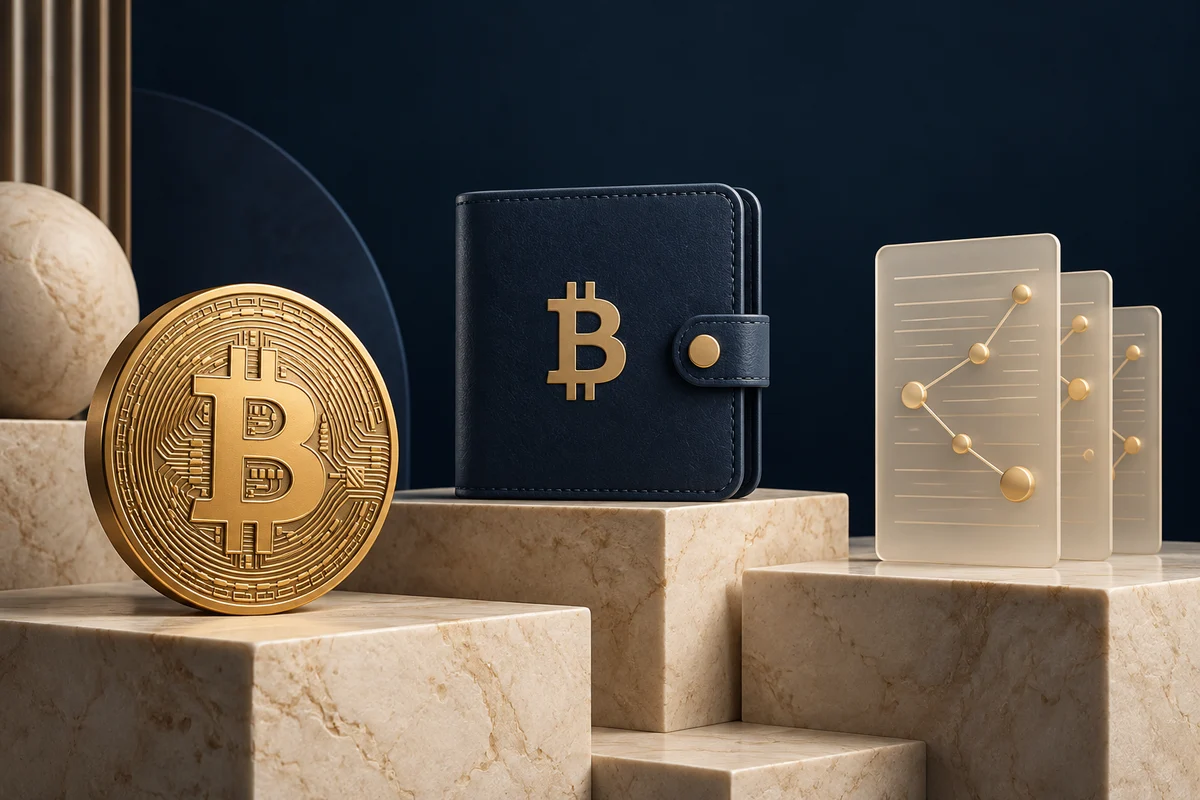
Bitcoin has no required physical shape, color or weight. The network keeps a shared record of transactions. Your ability to spend a Bitcoin amount depends on the keys that authorize it, rather than possession of a metal coin.
The familiar ₿ symbol helps people recognize Bitcoin. BTC is its ticker, used next to prices and amounts. A souvenir coin, logo or photograph can represent Bitcoin without containing any spendable BTC.
Some physical collectibles have been designed to hold access to Bitcoin through a private key. Their appearance alone cannot establish their balance, authenticity or whether somebody else has the key. Treat a physical collectible and a Bitcoin purchase as separate things to verify.
These teaching examples show different ways Bitcoin is represented. They are not account screenshots, live balances, payment instructions or evidence of a completed purchase.
01 / A familiar symbol
A Bitcoin symbol stamped on metal is an image or object. Holding it does not, by itself, give you Bitcoin you can spend.
02 / An amount in a wallet
Wallets can display BTC, satoshis and an estimated dollar value. The dollar figure moves with the price. The example above describes an amount of Bitcoin, not its current market value.
03 / A receiving destination
A receiving address is a string of letters and numbers. Some Bitcoin addresses begin with 1, 3 or bc1. The prefix alone does not verify the owner or compatibility. Get the complete address from your receiving wallet.
04 / A machine-readable request
Illustrative pattern. Not a scannable payment code.
A real receiving QR code can encode an address or a payment request. Scanning it fills in information; it does not prove the recipient is trustworthy or authorize a transfer by itself. Review the decoded address, network and amount.
05 / A record after a transfer
A public transaction record can help you check delivery. It does not replace the purchase receipt or establish who controls the receiving keys. See how Bitcoin transactions work.
A displayed balance is a starting point for checking your Bitcoin. A screenshot can be edited, a watch-only wallet can display funds it cannot spend, and a custodial account may show a balance before a withdrawal is permitted.
With a self-custody wallet, you are responsible for the keys and backup that authorize spending. With a custodial account, the provider controls the keys and applies its withdrawal rules. Read our Bitcoin wallet guide before choosing where to receive a purchase.
A hardware wallet is a device used to protect keys and sign transactions. The Bitcoin does not live as a coin-shaped file inside it. A receiving address and the network record connect the amount you see with the Bitcoin you can control.
For device-specific preparation, use our wire-to-hardware-wallet guide. If a purchase is still pending, establish whether you are waiting for bank settlement, account review or an on-chain transfer before making another payment.
Buying Bitcoin means purchasing an amount of BTC under the provider’s terms. You should be able to review the amount, total cost, receiving wallet and delivery conditions. A quote or bank debit confirms a step in that process, rather than completed Bitcoin delivery.
Our ACH Bitcoin buying page explains eligible bank funding and settlement. For help preparing bank instructions and reviewing the final price, see buying Bitcoin with wire transfer.
Compare our debit card and credit card buying options. Review the offer, provider charges and any separate issuer costs before approving payment.
Availability depends on your account, location, verification and the chosen payment method. Our ACH-versus-wire comparison can help you compare bank funding through to wallet delivery.
If you are still learning, start with the safe buying checklist. You can understand the records and wallet controls before deciding whether to buy.
A metal coin with the Bitcoin symbol can be a souvenir. Its appearance does not establish that it holds spendable BTC. Any claim about a funded physical collectible requires separate checks.
A wallet may show 1 BTC or 1.00000000 BTC. A smaller holding uses the same unit with a decimal amount. The interface design varies between wallets.
No. You can provide a receiving address to someone sending Bitcoin to you. A private key authorizes spending and must remain secret. Public addresses can reveal transaction history, so share them thoughtfully.
No. A receiving code provides payment information. Check the transfer and its receiving output, then the confirmation requirements of your wallet or service.
A screenshot alone is not sufficient evidence. Verify the relevant transaction in your own wallet and, where applicable, inspect its public transaction ID. Confirm that it pays the correct address and amount.
Prepared by the Crypto Dispensers team. Sources checked October 20, 2026. Illustrations and teaching examples are original; no customer data or actual account screenshots are shown.
Crypto Dispensers offers Bitcoin purchase services and has a commercial interest in the buying pages linked here. This guide explains the mechanics. Bitcoin prices can fall, transfers can be irreversible, and payment methods, fees and eligibility vary.
Your next step
Learning opens the way. When you are ready, explore buying Bitcoin by wire, debit, credit or ACH, selling supported crypto for USD to your bank, or swapping supported assets. Your account shows the options available to you.
Creating an account does not authorize a payment. Availability depends on your location, account and required checks.
Helping people access Bitcoin since 2017.
Privacy controls
Necessary cookies are always on so the site works. You can also allow analytics to help us improve the experience, and advertising cookies to measure campaigns and show more relevant ads. You can change this anytime.
Read our privacy policy