
Bitcoin history
Early exchanges, direct trades, PayPal payments and the wallets that held the keys.
By Crypto Dispensers · Published November 2, 2026
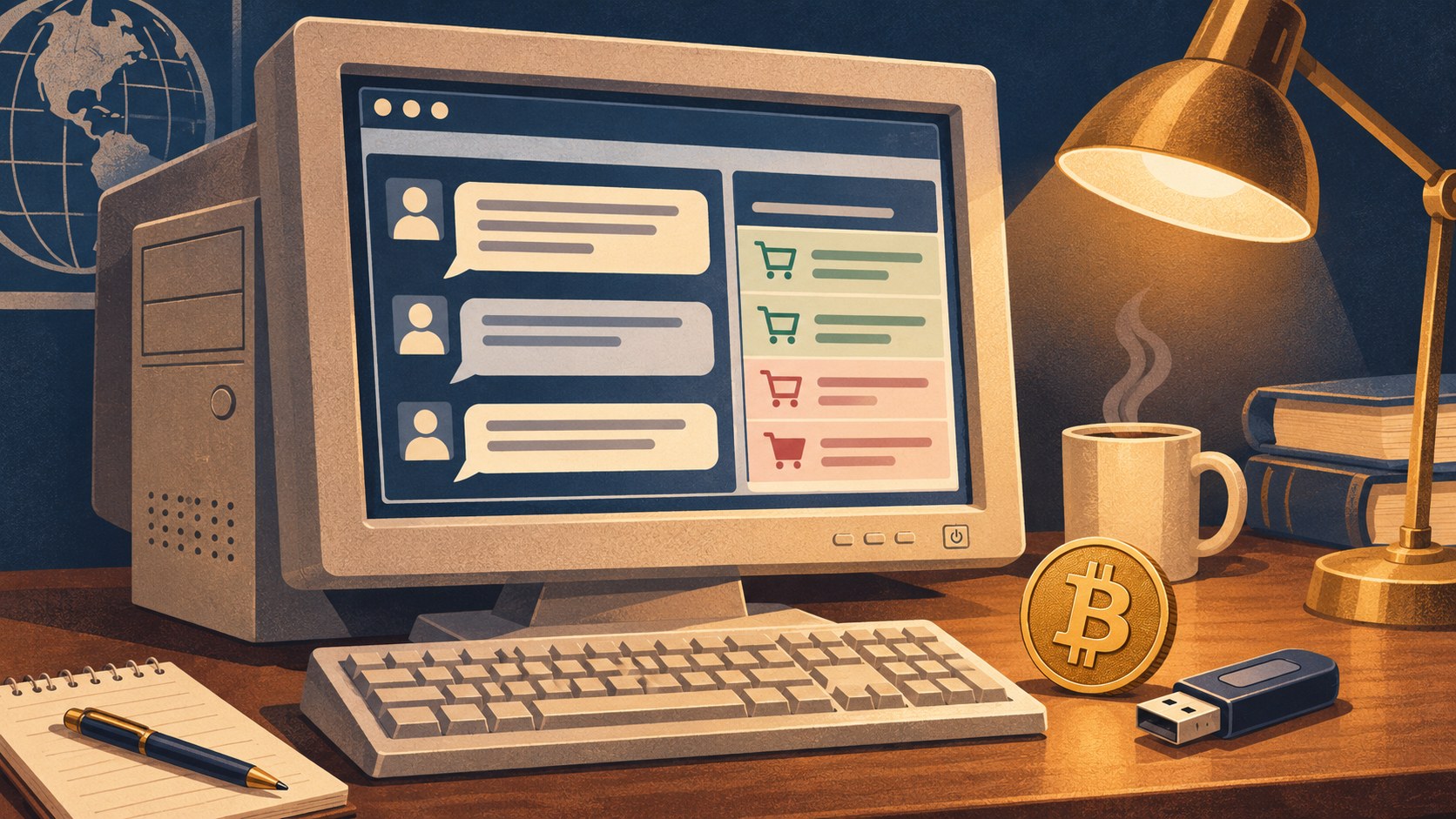
People bought Bitcoin in 2010 by arranging trades with other users and using early exchanges, including Bitcoin Market and Mt. Gox. PayPal helped handle the dollar side of some purchases. Buyers received bitcoin through a Bitcoin address or an exchange account. People also acquired coins through mining and giveaways.
The process changed during the year. To understand how someone actually bought bitcoin, you need to know which service existed at the time, how the payment reached the seller, and who controlled the coins afterward.
We checked the original forum announcements and payment instructions to explain how those pieces fit together. The services below are historical examples.
| Method | What the buyer did | Historical evidence |
|---|---|---|
| Direct trades | Agreed on an exchange with another person and provided a receiving address | The original pizza discussion documents a trade arranged between forum users |
| Bitcoin Market | Used an early marketplace to buy from sellers | Its operator invited real trading in March |
| Mt. Gox | Used an exchange that matched buy and sell orders | Its public announcement appeared in July |
| CoinPal | Paid a small service through PayPal | Its beta announcement appeared on December 31 |
Mining and faucets provided other ways to get bitcoin. We'll cover those separately because they explain why some early users never needed to make a purchase.
A direct trade meant finding someone willing to exchange bitcoin for something you could provide. The parties had to agree on the amount, what each person would receive, and how to complete the exchange.
The pizza transaction gives us a documented example. On May 18, 2010, Laszlo Hanyecz offered 10,000 BTC for pizza on the Bitcoin Forum. On May 22, he reported that the exchange had succeeded and thanked the user jercos. Those are separate dates: the offer came first, followed by confirmation of the completed trade. Read the original discussion.
From Hanyecz's perspective, he spent bitcoin to get pizza. From the other participant's perspective, arranging the food was a way to acquire bitcoin. That helps explain how early users could obtain coins through a personal agreement.
For more on the event, read our Bitcoin pizza story.
Bitcoin Market was operating before Mt. Gox. On March 16, 2010, its operator, dwdollar, invited real trading and said PayPal was handling the cash. A March 17 update reported a completed trade. See the March announcements.
An April 25 update described a specific payment process:
This shows how a marketplace could hold the bitcoin while the dollar payment moved directly between users. The operator also acknowledged chargeback risk. A reversed payment could leave a seller without the money after releasing the coins. Read the April payment instructions.
Mt. Gox opened in July 2010. Its original forum thread announced a new bitcoin exchange and discussed how buy and sell orders were matched. Read the announcement.
You may see both July 17 and July 18 given as its opening date. The records refer to different events. Clark Moody's historical market-data account identifies a trade at 23:09:17 UTC on July 17. The public forum announcement is timestamped July 18. See the trade record and forum timestamp.
An exchange made it easier to find a matching order. Buyers still needed to understand the platform's funding and withdrawal process. Payment arrangements also varied by service and date, so one set of instructions shouldn't be treated as the process for every purchase in 2010.
Yes. Early services used PayPal to transfer ordinary money as part of a bitcoin purchase. Bitcoin Market's records above document one arrangement.
Another example appeared at the very end of the year. On December 31, CoinPal announced a beta for buying bitcoin with PayPal. The initial service limited purchases to 10–20 BTC, required a verified PayPal account and a phone number at checkout, and capped purchases at 20 BTC per payer per week. Its operator said the beta would close when its available stock ran out. Read CoinPal's original announcement.
PayPal's own feature for buying, holding, and selling cryptocurrency inside a PayPal account arrived in 2020. A 2010 purchase using PayPal involved paying another person or service. See PayPal's October 2020 announcement.
A receiving address allowed someone to send bitcoin to the buyer's wallet. Wallet software managed the private keys needed to spend it. An exchange account could also show a balance held through that service; withdrawing to a wallet the buyer controlled changed who held the spending keys. Bitcoin's developer documentation explains these wallet functions.
For users of the original Bitcoin client, the file wallet.dat mattered. An October 2010 post by Satoshi Nakamoto discussed a new pool of pregenerated keys designed to make wallet.dat backups useful for future addresses. Read the contemporary backup explanation.
This helps explain why buying bitcoin and keeping access to it were separate responsibilities. Someone might successfully complete a purchase and later lose the wallet information needed to spend the coins.
If you're investigating an old purchase, preserve any original wallet files and backups before trying recovery steps. An address or payment receipt can help trace what happened, but spending bitcoin requires the relevant private keys. Keep wallet files and keys private. Bitcoin.org explains wallet backups and security.
Some received donated coins. Others mined bitcoin with computing equipment. Each method worked differently.
On June 11, 2010, Gavin Andresen announced a website giving away five bitcoin per customer. He initially stocked it with 1,100 BTC so people could try Bitcoin. His announcement also described buying bitcoin as cumbersome, giving us a contemporary explanation for why a giveaway was useful. Read the faucet announcement.
Those coins came from the faucet's supply. A visitor receiving a donation wasn't purchasing bitcoin at a market price of zero.
Mining involved using computing power to help produce valid blocks. The 2010 Bitcoin software specified a block subsidy of 50 BTC before the first halving. That amount was a reward for a successful block, with fees added, rather than an automatic payment to everyone running the software. See the original version 0.3.0 code.
Equipment, electricity, and the chance of finding a block still mattered. A historical block reward doesn't tell you how much an individual miner earned.
There was no single price for the whole year. A useful historical price needs a date, a trading venue, and an explanation of what the number represents.
For example, Clark Moody's account records an early Mt. Gox trade of 20 BTC at $0.04951 each on July 17, 2010. The total was $0.9902, just under one dollar. That is evidence of a specific trade at a specific time. See the market-data account.
It doesn't establish that every buyer could purchase any quantity at that price. A calculation based on a historical quote assumes enough sellers were available and willing to fill the order.
If you're checking a claim such as “$100 would have bought thousands of bitcoin,” ask:
Those questions give you a more useful answer than dividing a dollar amount by an unexplained price.
The records show several practical obstacles. Buyers had to find an available seller or service. Payment instructions could change. Sellers faced payment reversals. Wallet users needed to protect their backups.
The price of a coin was only part of the problem. A buyer also needed a workable way to pay, receive bitcoin, and retain access to it.
That remains a useful way to evaluate a purchase today: understand the total quote, check where the bitcoin will be delivered, and know who controls the receiving wallet. Historical prices don't predict future returns, and bitcoin can lose value.
If you're learning before making a purchase, our Bitcoin guides cover wallets, transactions, fees, and safety. Crypto Dispensers offers Bitcoin purchasing services, so we have a commercial interest in helping people understand how purchases work.
Yes. Bitcoin Market was trading in March, and Mt. Gox opened in July. The dated announcements above show when each became an option.
No. Buying, accepting bitcoin in an exchange with another person, and receiving faucet donations were other documented ways to acquire coins.
A faucet distributed donated coins. That giveaway doesn't establish a market price for bitcoin bought from a seller.
PayPal's built-in cryptocurrency buying service arrived in 2020. In 2010, some buyers used PayPal to pay an external seller or bitcoin service.
That depends on what happened afterward. The buyer may have sold or spent it, lost access to the keys, or left it with a service. A purchase record alone doesn't establish a current spendable balance.
Research note: This article draws on dated forum posts, historical market data, original software, and wallet documentation. The purchase walkthrough explains a documented April 2010 Bitcoin Market process. Other services and dates could involve different steps.
Your Crypto Dispensers account
Create an account to see the services available to you. You can buy Bitcoin by wire, debit, credit or ACH, sell supported crypto for a USD bank payout, or exchange supported assets. Contact our team if you need help choosing a service.
Creating an account does not authorize a payment. Availability depends on your location, account and required checks.
Helping people access Bitcoin since 2017.
Privacy controls
Necessary cookies are always on so the site works. You can also allow analytics to help us improve the experience, and advertising cookies to measure campaigns and show more relevant ads. You can change this anytime.
Read our privacy policy